Bucknell Film/Media Screenings at The Campus Theatre

  • About the Screenings
  • Current Series
    • Mondays
    • Tuesdays
    • Wednesdays
    • Thursdays
  • Bucknell Film Review
  • Program Archives
  • Contact

Tuesday Series

Tuesday, August 25 at 7pm

Monkey Business – Monroe Centennial Restoration!

Directed by Howard Hawks (U.S. 1952) 97 min. DCP. With Marilyn Monroe, Cary Grant, Ginger Rogers, Charles Coburn.

“Ginger Rogers and Cary Grant reunited, in a film which looks back to screwball’s heyday and especially to Bringing Up Baby. Barnaby Fulton (Grant) is working on a youth formula for a chemical company, but lab monkeys monkey around with the potion. The resulting elixir sends Barnaby and his wife Edwina (Rogers) spiraling back to their wild teens and beyond, with Marilyn Monroe’s curvaceous secretary Miss Laurel causing a certain amount of bad blood between them.” – British Film Institute

“It would be tempting for contemporary audiences to find Monkey Business’ reiteration of Monroe’s dumb blonde character sexist and, by extension, class Hawks as a sexist director, but the intentions of the film are complicated. Hawks’ strengths and weaknesses hinge on his non-intellectual approach, what Robin Wood calls ‘his intuitive response and spontaneous involvement.’ As a result, Monkey Business reflects many of the latent attitudes of post-war America. This, coupled with Hawks’ intuitive practice of building gags upon gags until they reach their logical conclusion, leads the film down some strange corridors…”
– Andréas Giannopoulos, Senses of Cinema

TOP OF PAGE

Tuesday, September 1 at 7pm

Resurrection – Area Premiere!

Directed by Bi Gan (China 2025) 159 min. DCP. With Huang Jue, Jackson Yee, Li Gengxi, Mark Chao, Shu Qi. Chinese with English subtitles.

With his senses-ravishing third feature, visionary director Bi Gan takes his deepest plunge yet into the realm of pure cinematic dreamscape. In a world where humans have forsaken dreams in exchange for immortality, a dreaming monster (Yee) embarks on a shape-shifting odyssey through illusion, beauty, and terror that takes him across the twentieth century and to the end of time. Unfolding in five dazzlingly imagined chapters that encompass everything from silent-cinema expressionism to film noir to a delirious vampire love story shot in one of Bi’s signature long takes, Resurrection is a work of breathtaking imagination in which cinema is the ultimate portal to the unconscious mind.

“What makes the film especially delectable is that Bi Gan changes visual styles and narrative techniques throughout this movie odyssey… a cinephile’s delight.” – Manohla Dargis, The New York Times
TOP OF PAGE

Tuesday, September 8 at 7pm

The Other Love – New Restoration from Nitrate Negative!

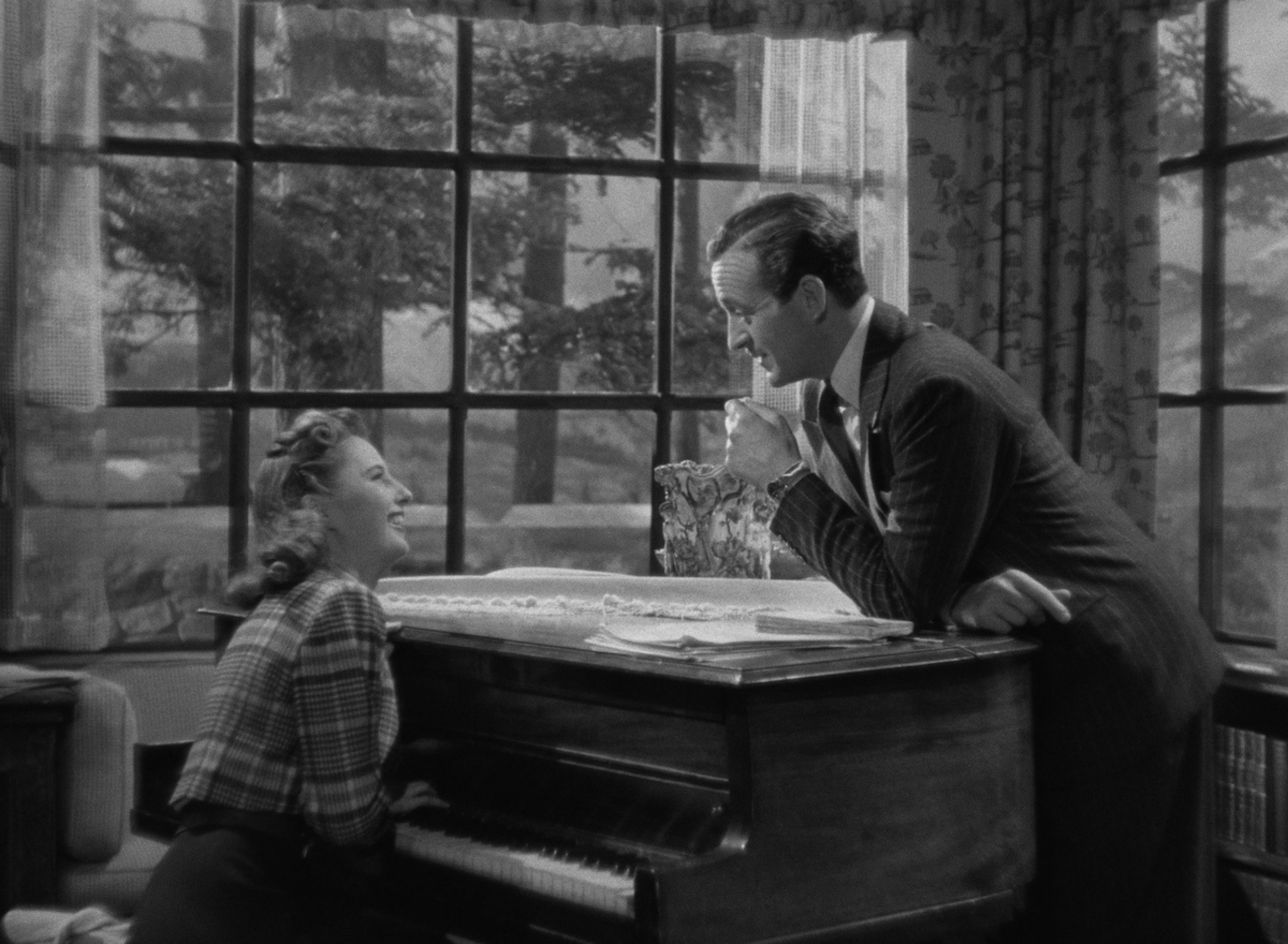
Directed by André de Toth (U.S. 1947) 99 min. DCP. With Barbara Stanwyck, David Niven, Richard Conte, Gilbert Roland, Joan Lorring.

Based on an unpublished short story by Erich Maria Remarque, The Other Love explores the existential themes of love and death that recur throughout his novels. The plot concerns a concert pianist, Karen Duncan (Stanwyck), convalescing from tuberculosis in the Alps, who is tempted by a short, adventure-filled life as opposed to the sedate existence in the sanatorium that offers her a chance at a future. She must choose between two lovers: her doctor (Niven) and an impetuous race car driver (Conte). Director André de Toth, though better known for helming gutsy and tense low-budget Western and film noir projects than for high-fashion “woman’s pictures,” guides his stellar cast, as well as cinematographer Victor Milner and composer Miklós Rózsa, to deliver a moody and melodramatic gem. After the premiere and preview screenings of the film, the original longer ending was replaced with one deemed more palatable to American audiences for its general U.S. release. This original version, now restored, has not been seen by audiences since the 1940s. — UCLA Film & Television Archive Head of Preservation Jillian Borders Restored by the UCLA Film & Television Archive with funding provided by the Century Arts Foundation.
TOP OF PAGE

Tuesday, September 15 at 7pm

Distant

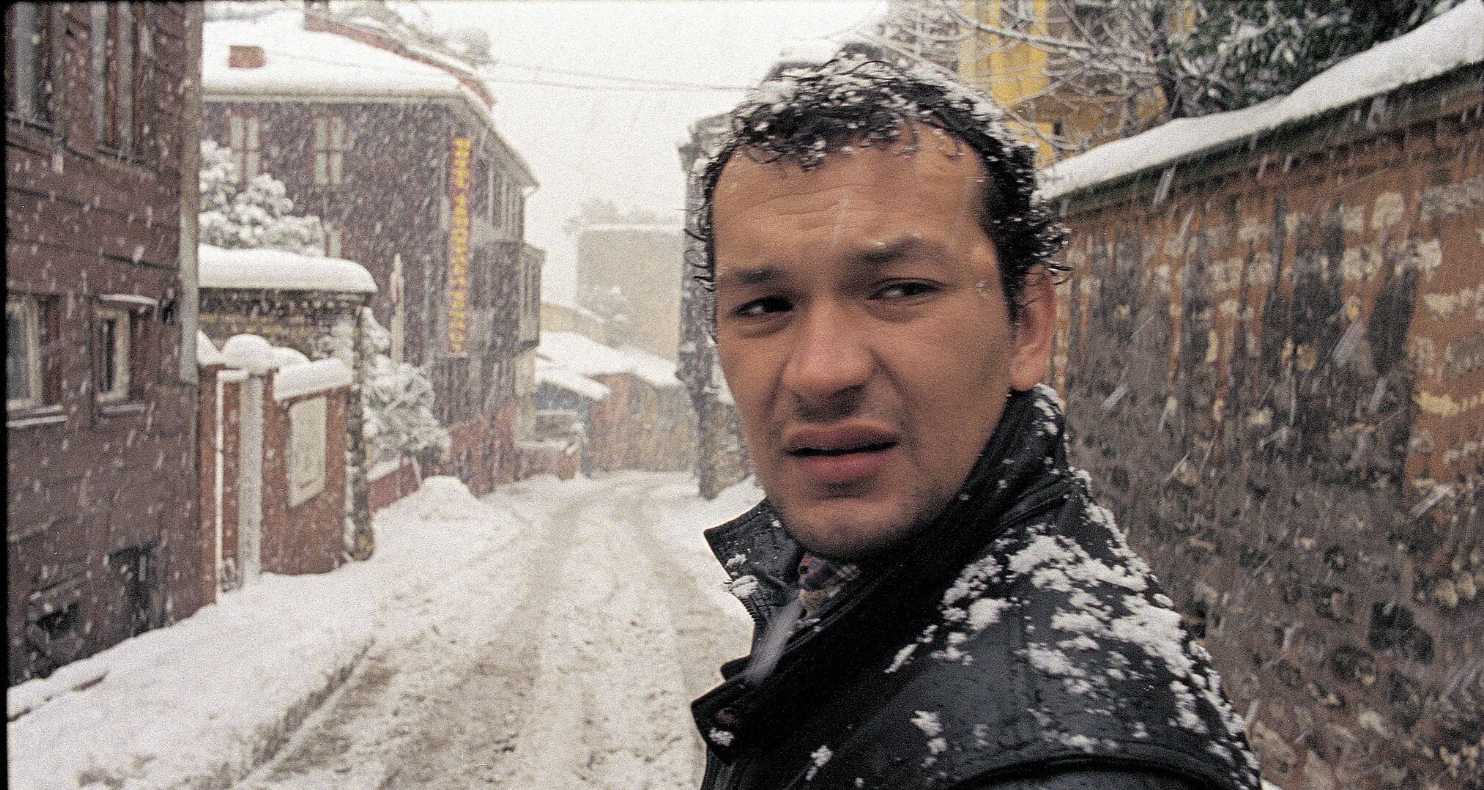
Directed by Nuri Bilge Ceylan (Turkey 2002) 110 min. 35MM. With Muzaffer Özdemir, Mehmet Emin Toprak. In Turkish with English subtitles.

Winner of the Grand Prix at the 56th Cannes Film Festival, where its two leads, Muzaffer Özdemir and Mehmet Emin Toprak, also shared an acting prize (the latter had been tragically killed in a 2002 car accident), Ceylan’s international breakout is a closely observed, contemplative dual portrait of an odd couple: Mahmut (Özdemir) is an arrogant, depressive photographer recently abandoned by his wife; Yusuf (Toprak), his recently unemployed country bumpkin relation who, while looking for work in the big city, becomes a not-particularly-welcome guest in Mahmut’s minimalist chic Istanbul apartment. The chill in the air of the Turkish metropolis in winter is palpable, here; so too, the lonely ache of these two men so unsuited for companionship, and so in need of it. Heartbreaking. – Metrograph Pictures

TOP OF PAGE

“A movie like this touches everyday life in a way that we can recognize as if Turkey were Peoria.” – Roger Ebert, Chicago Sun-Times

“A movie of quiet revelations…thoughtfully orchestrated and filled with visual wit. Although his mood of rapt sadness is his own, Turkish auteur Nuri Bilge Ceylan is working in the tradition of Michelangelo Antonioni’s early-‘60s (feel for bourgeois estrangement), Yasujiro Ozu (exquisite, unshowy compositions), Robert Bresson (precise use of sound), Abbas Kiarostami’s early-‘90s modernism, and even Jacques Tati (deadpan humor).” — J. Hoberman, for The Village Voice & the New York Times

Tuesday, September 22 at 7pm

Three Songs About Lenin

Directed by Dziga Vertov (USSR, 1934/38) 61 min. DCP. Russian with English intertitles.

Released for the tenth anniversary of the death of Vladimir Lenin in 1934—Three Songs About Lenin was made by gathering all the known footage of Lenin and recording first-person testimonies about his legacy by workers, peasants, and newly liberated women of Central Asia. An international hit, the documentary defined the new aesthetic of socialist realism, which became the aesthetic for international socialism. It also articulates Dziga Vertov’s path from avant-garde montage to the “poetic documentary” he was proposing. While Man with a Movie Camera (1929) is Vertov’s most well-known film, during his lifetime, Three Songs of Lenin (1934) was the director’s most popular and acclaimed accomplishment. Introduced by Professor of History Zukhra Kasimova.

“Soviet critics of the day read Vertov’s soft skew toward canned drama in Three Songs as a humanist counterpoint to the perceived soullessness of his previous works, which were dedicated to programmatic explorations of economic modernization and political abstractions. Myopically or disingenuously, the party faithful found more humanity in Three Songs’s hagiography and Hollywood-inflected characterization than in Man with the Movie Camera’s vital portrait of “life caught unawares.” The misapprehension has been corrected by recent generations of film scholars and perceptive audiences. That’s not to say that Three Songs has little to offer contemporary viewers, however. Three Songs About Lenin remains a fascinating and often invigorating demonstration of an artist forsaken by his times, trying valiantly to square a collective past with the demands of a forecasted future.” — Patrick Dahl, Screen Slate

TOP OF PAGE

Tuesday, September 29 at 6pm

Ex Libris

Directed by Frederick Wiseman (U.S. 2017) 197 min. DCP.

Frederick Wiseman’s film, Ex LIBRIS– The New York Public Library, goes behind the scenes of one of the greatest knowledge institutions in the world and reveals it as a place of welcome, cultural exchange and learning. With 92 locations throughout Manhattan, the Bronx and Staten Island, the library is committed to being a resource for all the inhabitants of this multifaceted and cosmopolitan city, and beyond. The New York Public Library exemplifies the deeply rooted American belief in the individual’s right to know and be informed. It is one of the most democratic institutions in America – everyone is welcome. The Library strives to inspire learning, advance knowledge and strengthen communities. Presented in conjunction with the Bertrand Library 75th anniversary programming.

“Critic’s Pick. Magnificent…lays bare this complex, glorious organism that is the democratic ideal incarnate… In EX LIBRIS, democracy is alive and in the hands of a forceful advocate and brilliant filmmaker, which helps make this one of the greatest movies of Mr. Wiseman’s extraordinary career and one of his most thrilling.” – Manohla Dargis, The New York Times

TOP OF PAGE

Tuesday, October 6 at 7pm

In Excess – Director in Person!

Directed by Melissa Langer (U.S. 2025) 70 min. DCP.

In Excess examines labor, capital, and displacement in modern America through the lens of one city’s trash — in sewers and streets, waterways and workplaces. It’s a gritty dive into the inner workings of a city’s infrastructure that embraces different formats, weaving newly digitized archival material together with surveillance footage and contemporary vignettes of people at work, communities in flux, and waste in motion. Observational and off-beat, the film finds harmonies and dissonance in patterns of creation, consumption, and renewal. Presented in collaboration with Susquehanna University’s Lore Degenstein Gallery, on the occasion of its fall exhibition, Wasted.

TOP OF PAGE

Tuesday, October 20 at 7pm

Clean

Directed by OIivier Assayas (France, United Kingdom, Canada 2004) 35MM. 90 min. With Maggie Cheung, Nick Nolte, Béatrice Dalle.

A chameleonic auteur of French cinema, Olivier Assayas intertwines art cinema and popular culture and often with his muse, the magnetic Hong Kong actress Maggie Cheung; here she delivers a multilayered performance—winning her a Best Actress prize at Cannes—in this clear-eyed, emotionally complicated portrait of a woman attempting to reclaim her life in the wake of profound loss. After her rock-star partner dies of an overdose, recovering addict Emily (Cheung) drifts between Canada and Paris as she struggles to stay sober and prove that she is ready to retake custody of her son, all while finding her voice as a singer. Introduced by Philosophy Professor Adam Burgos in connection to his fall courses.

TOP OF PAGE

Tuesday, October 27 at 7pm

beDevil

Directed by Tracey Moffatt (Australia 1993) DCP. 86 min. With Diana Davidson, Jack Charles, Ben Kennedy, Kenneth Avery.

beDevil is the stunning debut feature from groundbreaking artist Tracey Moffatt, and the first feature directed by an Australian Aboriginal woman. Inspired by ghost stories she heard as a child from both her extended Aboriginal and Irish Australian families, Tracey Moffatt has constructed a sublime trilogy in which characters are haunted by the past and bewitched by memories. All three stories are set in Moffatt’s highly stylized, hyper-real, hyper-imaginary Australian landscape. In the first story, a young boy is fascinated and terrified by a swamp that is haunted by the ghost of an American GI. The second finds a family living by railroad tracks haunted by strange happenings. The mother (played by Moffatt) is drawn to the tracks at night as she senses the horror of a past tragedy. The final story follows a woman who resists eviction attempts by her landlord so she can keep vigil for her dead son. Introduced by Literary Studies Professor Jeremy Chow in connection to his course Intro to Race and Literature: Racial Horror.

“beDevil captures the allusive quality of parochial, local, familial ghost stories, the sort of stories that are passed down through generations, that are repeated and embroidered upon so that eventually they are woven into quotidian discourse and a passing reference can evoke a complex texture of ghostliness.” — Lesley Stern, Photofile

TOP OF PAGE

Tuesday, November 3 at 7pm

The Stranger

Directed by François Ozon (France 2025) DCP. 120 min. With Benjamin Voisin, Pierre Lottin, Denis Lavant. French with English subtitles.

Photographed in sterling, sensuous black-and-white, François Ozon’s new take on Albert Camus’s classic novel of existentialist ennui is a landmark of adaptation, simultaneously faithful to the text and dedicated to discovering fresh perspectives in the margins. Meursault (Voisin) works as a clerk at an office in Algiers during the French colonial occupation. A modest man who keeps to himself, Meursault finds his routine upended by the sudden death of his mother. At her funeral, he faces scrutiny from all corners for his failure to perform his grief. Meursault’s reputation for otherworldly detachment carries over to all aspects of his life, from his tentative romance with Marie (Rebecca Marder) to his indifference to professional advancement. As Meursault gets swept up in a cycle of escalating reprisals among his neighbors, tensions come to a head when he murders an Arab man on the beach. A Frenchman may offer many defenses for shooting an Arab in Algeria, but Meursault’s refusal of excuse or remorse shakes colonial society to its core. Introduced by French & Francophone Studies Professor John Westbrook. Presented in partnership with Bucknell’s French Studies Program, courtesy of a Cinémathèque Albertine grant.

“Haunting, transportive, and tragically humanist.” – Slant Magazine

TOP OF PAGE

Tuesday, November 10 at 7pm

Mary Oliver: Saved by the Beauty of the World – Director in Person!

Directed by Sasha Waters (U.S. 2026) DCP. 91 min. With Mary Oliver, Helena Bonham Carter, Steve Buscemi, Stephen Colbert, Lucy Dacus, Oprah Winfrey.

If poetry had a pop icon, Mary Oliver would be it. Celebrated best-selling poet, Pulitzer Prize-winner, lover of dogs and long walks in the woods, openly queer but intensely private, Oliver was America’s unlikely contemporary mystic, stalking the ponds and forests of Cape Cod for nearly fifty years in order to open herself – and her readers – to the known and unknowable world. From a lonely childhood to literary fame, Oliver’s life was shaped by devotion to nature, paying attention, and the long journey toward learning to love and to be loved. Her poems inspire liberals and conservatives, atheists and believers, naturalists and urbanites, speaking directly to contemporary anxieties about attention, presence, and the human relationship with the natural world – issues that feel especially pressing in an era of climate crisis, digital distraction, and social fragmentation.

Featuring interviews with her close friends, including John Waters, never-before-seen personal photos, notebooks, and correspondence from her archive, and recitations of her work by Stephen Colbert, Lucy Dacus, Steve Buscemi, and Oprah Winfrey, Mary Oliver: Saved by the Beauty of the World considers the poet’s long lifetime of work in context, capturing the uniqueness of her world and the natural beauty that inspired her. Presented in partnership with Bucknell’s Humanities Center and its year-long programming Oh, the Humanities!

“Waters’s film seeks to explain why Oliver’s poetry means so much to so many people… making space for audiences to have their own experiences with her poems. Tidbits of these have become almost aphoristic, but the fuller context a film like this brings can result in more appreciation, for new readers and longtime fans alike.” – The New York Times

TOP OF PAGE

Tuesday Series

Tuesday, August 25 at 7pm

Monkey Business – Monroe Centennial Restoration!

Directed by Howard Hawks (U.S. 1952) 97 min. DCP. With Marilyn Monroe, Cary Grant, Ginger Rogers, Charles Coburn.

“Ginger Rogers and Cary Grant reunited, in a film which looks back to screwball’s heyday and especially to Bringing Up Baby. Barnaby Fulton (Grant) is working on a youth formula for a chemical company, but lab monkeys monkey around with the potion. The resulting elixir sends Barnaby and his wife Edwina (Rogers) spiraling back to their wild teens and beyond, with Marilyn Monroe’s curvaceous secretary Miss Laurel causing a certain amount of bad blood between them.” – British Film Institute

“It would be tempting for contemporary audiences to find Monkey Business’ reiteration of Monroe’s dumb blonde character sexist and, by extension, class Hawks as a sexist director, but the intentions of the film are complicated. Hawks’ strengths and weaknesses hinge on his non-intellectual approach, what Robin Wood calls ‘his intuitive response and spontaneous involvement.’ As a result, Monkey Business reflects many of the latent attitudes of post-war America. This, coupled with Hawks’ intuitive practice of building gags upon gags until they reach their logical conclusion, leads the film down some strange corridors…”
– Andréas Giannopoulos, Senses of Cinema

TOP OF PAGE

Tuesday, September 1 at 7pm

Resurrection – Area Premiere!

Directed by Bi Gan (China 2025) 159 min. DCP. With Huang Jue, Jackson Yee, Li Gengxi, Mark Chao, Shu Qi. Chinese with English subtitles.

With his senses-ravishing third feature, visionary director Bi Gan takes his deepest plunge yet into the realm of pure cinematic dreamscape. In a world where humans have forsaken dreams in exchange for immortality, a dreaming monster (Yee) embarks on a shape-shifting odyssey through illusion, beauty, and terror that takes him across the twentieth century and to the end of time. Unfolding in five dazzlingly imagined chapters that encompass everything from silent-cinema expressionism to film noir to a delirious vampire love story shot in one of Bi’s signature long takes, Resurrection is a work of breathtaking imagination in which cinema is the ultimate portal to the unconscious mind.

“What makes the film especially delectable is that Bi Gan changes visual styles and narrative techniques throughout this movie odyssey… a cinephile’s delight.” – Manohla Dargis, The New York Times

TOP OF PAGE

Tuesday, September 8 at 7pm

The Other Love – New Restoration from Nitrate Negative!

Directed by André de Toth (U.S. 1947) 99 min. DCP. With Barbara Stanwyck, David Niven, Richard Conte, Gilbert Roland, Joan Lorring.

Based on an unpublished short story by Erich Maria Remarque, The Other Love explores the existential themes of love and death that recur throughout his novels. The plot concerns a concert pianist, Karen Duncan (Stanwyck), convalescing from tuberculosis in the Alps, who is tempted by a short, adventure-filled life as opposed to the sedate existence in the sanatorium that offers her a chance at a future. She must choose between two lovers: her doctor (Niven) and an impetuous race car driver (Conte). Director André de Toth, though better known for helming gutsy and tense low-budget Western and film noir projects than for high-fashion “woman’s pictures,” guides his stellar cast, as well as cinematographer Victor Milner and composer Miklós Rózsa, to deliver a moody and melodramatic gem. After the premiere and preview screenings of the film, the original longer ending was replaced with one deemed more palatable to American audiences for its general U.S. release. This original version, now restored, has not been seen by audiences since the 1940s. — UCLA Film & Television Archive Head of Preservation Jillian Borders Restored by the UCLA Film & Television Archive with funding provided by the Century Arts Foundation.

TOP OF PAGE

Tuesday, September 15 at 7pm

Distant

Directed by Nuri Bilge Ceylan (Turkey 2002) 110 min. 35MM. With Muzaffer Özdemir, Mehmet Emin Toprak. In Turkish with English subtitles.

Winner of the Grand Prix at the 56th Cannes Film Festival, where its two leads, Muzaffer Özdemir and Mehmet Emin Toprak, also shared an acting prize (the latter had been tragically killed in a 2002 car accident), Ceylan’s international breakout is a closely observed, contemplative dual portrait of an odd couple: Mahmut (Özdemir) is an arrogant, depressive photographer recently abandoned by his wife; Yusuf (Toprak), his recently unemployed country bumpkin relation who, while looking for work in the big city, becomes a not-particularly-welcome guest in Mahmut’s minimalist chic Istanbul apartment. The chill in the air of the Turkish metropolis in winter is palpable, here; so too, the lonely ache of these two men so unsuited for companionship, and so in need of it. Heartbreaking. – Metrograph Pictures

TOP OF PAGE

“A movie like this touches everyday life in a way that we can recognize as if Turkey were Peoria.” – Roger Ebert, Chicago Sun-Times

“A movie of quiet revelations…thoughtfully orchestrated and filled with visual wit. Although his mood of rapt sadness is his own, Turkish auteur Nuri Bilge Ceylan is working in the tradition of Michelangelo Antonioni’s early-‘60s (feel for bourgeois estrangement), Yasujiro Ozu (exquisite, unshowy compositions), Robert Bresson (precise use of sound), Abbas Kiarostami’s early-‘90s modernism, and even Jacques Tati (deadpan humor).” — J. Hoberman, for The Village Voice & the New York Times

Tuesday, September 22 at 7pm

Three Songs About Lenin

Directed by Dziga Vertov (USSR, 1934/38) 61 min. DCP. Russian with English intertitles.

Released for the tenth anniversary of the death of Vladimir Lenin in 1934—Three Songs About Lenin was made by gathering all the known footage of Lenin and recording first-person testimonies about his legacy by workers, peasants, and newly liberated women of Central Asia. An international hit, the documentary defined the new aesthetic of socialist realism, which became the aesthetic for international socialism. It also articulates Dziga Vertov’s path from avant-garde montage to the “poetic documentary” he was proposing. While Man with a Movie Camera (1929) is Vertov’s most well-known film, during his lifetime, Three Songs of Lenin (1934) was the director’s most popular and acclaimed accomplishment. Introduced by Professor of History Zukhra Kasimova.

“Soviet critics of the day read Vertov’s soft skew toward canned drama in Three Songs as a humanist counterpoint to the perceived soullessness of his previous works, which were dedicated to programmatic explorations of economic modernization and political abstractions. Myopically or disingenuously, the party faithful found more humanity in Three Songs’s hagiography and Hollywood-inflected characterization than in Man with the Movie Camera’s vital portrait of “life caught unawares.” The misapprehension has been corrected by recent generations of film scholars and perceptive audiences. That’s not to say that Three Songs has little to offer contemporary viewers, however. Three Songs About Lenin remains a fascinating and often invigorating demonstration of an artist forsaken by his times, trying valiantly to square a collective past with the demands of a forecasted future.” — Patrick Dahl, Screen Slate

TOP OF PAGE

Tuesday, September 29 at 6pm

Ex Libris

Directed by Frederick Wiseman (U.S. 2017) 197 min. DCP.

Frederick Wiseman’s film, Ex LIBRIS– The New York Public Library, goes behind the scenes of one of the greatest knowledge institutions in the world and reveals it as a place of welcome, cultural exchange and learning. With 92 locations throughout Manhattan, the Bronx and Staten Island, the library is committed to being a resource for all the inhabitants of this multifaceted and cosmopolitan city, and beyond. The New York Public Library exemplifies the deeply rooted American belief in the individual’s right to know and be informed. It is one of the most democratic institutions in America – everyone is welcome. The Library strives to inspire learning, advance knowledge and strengthen communities. Presented in conjunction with the Bertrand Library 75th anniversary programming.

“Critic’s Pick. Magnificent…lays bare this complex, glorious organism that is the democratic ideal incarnate… In EX LIBRIS, democracy is alive and in the hands of a forceful advocate and brilliant filmmaker, which helps make this one of the greatest movies of Mr. Wiseman’s extraordinary career and one of his most thrilling.” – Manohla Dargis, The New York Times

TOP OF PAGE

Tuesday, October 6 at 7pm

In Excess – Director in Person!

Directed by Melissa Langer (U.S. 2025) 70 min. DCP.

In Excess examines labor, capital, and displacement in modern America through the lens of one city’s trash — in sewers and streets, waterways and workplaces. It’s a gritty dive into the inner workings of a city’s infrastructure that embraces different formats, weaving newly digitized archival material together with surveillance footage and contemporary vignettes of people at work, communities in flux, and waste in motion. Observational and off-beat, the film finds harmonies and dissonance in patterns of creation, consumption, and renewal. Presented in collaboration with Susquehanna University’s Lore Degenstein Gallery, on the occasion of its fall exhibition, Wasted.

TOP OF PAGE

Tuesday, October 20 at 7pm

Clean

Directed by OIivier Assayas (France, United Kingdom, Canada 2004) 35MM. 90 min. With Maggie Cheung, Nick Nolte, Béatrice Dalle.

A chameleonic auteur of French cinema, Olivier Assayas intertwines art cinema and popular culture and often with his muse, the magnetic Hong Kong actress Maggie Cheung; here she delivers a multilayered performance—winning her a Best Actress prize at Cannes—in this clear-eyed, emotionally complicated portrait of a woman attempting to reclaim her life in the wake of profound loss. After her rock-star partner dies of an overdose, recovering addict Emily (Cheung) drifts between Canada and Paris as she struggles to stay sober and prove that she is ready to retake custody of her son, all while finding her voice as a singer. Introduced by Philosophy Professor Adam Burgos in connection to his fall courses.

TOP OF PAGE

Tuesday, October 27 at 7pm

beDevil

Directed by Tracey Moffatt (Australia 1993) DCP. 86 min. With Diana Davidson, Jack Charles, Ben Kennedy, Kenneth Avery.

beDevil is the stunning debut feature from groundbreaking artist Tracey Moffatt, and the first feature directed by an Australian Aboriginal woman. Inspired by ghost stories she heard as a child from both her extended Aboriginal and Irish Australian families, Tracey Moffatt has constructed a sublime trilogy in which characters are haunted by the past and bewitched by memories. All three stories are set in Moffatt’s highly stylized, hyper-real, hyper-imaginary Australian landscape. In the first story, a young boy is fascinated and terrified by a swamp that is haunted by the ghost of an American GI. The second finds a family living by railroad tracks haunted by strange happenings. The mother (played by Moffatt) is drawn to the tracks at night as she senses the horror of a past tragedy. The final story follows a woman who resists eviction attempts by her landlord so she can keep vigil for her dead son. Introduced by Literary Studies Professor Jeremy Chow in connection to his course Intro to Race and Literature: Racial Horror.

“beDevil captures the allusive quality of parochial, local, familial ghost stories, the sort of stories that are passed down through generations, that are repeated and embroidered upon so that eventually they are woven into quotidian discourse and a passing reference can evoke a complex texture of ghostliness.” — Lesley Stern, Photofile

TOP OF PAGE

Tuesday, November 3 at 7pm

The Stranger

Directed by François Ozon (France 2025) DCP. 120 min. With Benjamin Voisin, Pierre Lottin, Denis Lavant. French with English subtitles.

Photographed in sterling, sensuous black-and-white, François Ozon’s new take on Albert Camus’s classic novel of existentialist ennui is a landmark of adaptation, simultaneously faithful to the text and dedicated to discovering fresh perspectives in the margins. Meursault (Voisin) works as a clerk at an office in Algiers during the French colonial occupation. A modest man who keeps to himself, Meursault finds his routine upended by the sudden death of his mother. At her funeral, he faces scrutiny from all corners for his failure to perform his grief. Meursault’s reputation for otherworldly detachment carries over to all aspects of his life, from his tentative romance with Marie (Rebecca Marder) to his indifference to professional advancement. As Meursault gets swept up in a cycle of escalating reprisals among his neighbors, tensions come to a head when he murders an Arab man on the beach. A Frenchman may offer many defenses for shooting an Arab in Algeria, but Meursault’s refusal of excuse or remorse shakes colonial society to its core. Introduced by French & Francophone Studies Professor John Westbrook. Presented in partnership with Bucknell’s French Studies Program, courtesy of a Cinémathèque Albertine grant.

“Haunting, transportive, and tragically humanist.” – Slant Magazine

TOP OF PAGE

Tuesday, November 10 at 7pm

Mary Oliver: Saved by the Beauty of the World – Director in Person!

Directed by Sasha Waters (U.S. 2026) DCP. 91 min. With Mary Oliver, Helena Bonham Carter, Steve Buscemi, Stephen Colbert, Lucy Dacus, Oprah Winfrey.

If poetry had a pop icon, Mary Oliver would be it. Celebrated best-selling poet, Pulitzer Prize-winner, lover of dogs and long walks in the woods, openly queer but intensely private, Oliver was America’s unlikely contemporary mystic, stalking the ponds and forests of Cape Cod for nearly fifty years in order to open herself – and her readers – to the known and unknowable world. From a lonely childhood to literary fame, Oliver’s life was shaped by devotion to nature, paying attention, and the long journey toward learning to love and to be loved. Her poems inspire liberals and conservatives, atheists and believers, naturalists and urbanites, speaking directly to contemporary anxieties about attention, presence, and the human relationship with the natural world – issues that feel especially pressing in an era of climate crisis, digital distraction, and social fragmentation.

Featuring interviews with her close friends, including John Waters, never-before-seen personal photos, notebooks, and correspondence from her archive, and recitations of her work by Stephen Colbert, Lucy Dacus, Steve Buscemi, and Oprah Winfrey, Mary Oliver: Saved by the Beauty of the World considers the poet’s long lifetime of work in context, capturing the uniqueness of her world and the natural beauty that inspired her. Presented in partnership with Bucknell’s Humanities Center and its year-long programming Oh, the Humanities!

“Waters’s film seeks to explain why Oliver’s poetry means so much to so many people… making space for audiences to have their own experiences with her poems. Tidbits of these have become almost aphoristic, but the fuller context a film like this brings can result in more appreciation, for new readers and longtime fans alike.” – The New York Times

TOP OF PAGE

All screenings are open to the public and take place at:

Campus Theatre
413 Market Street
Lewisburg PA

Log in

Coming November 10th!